

Fact Check
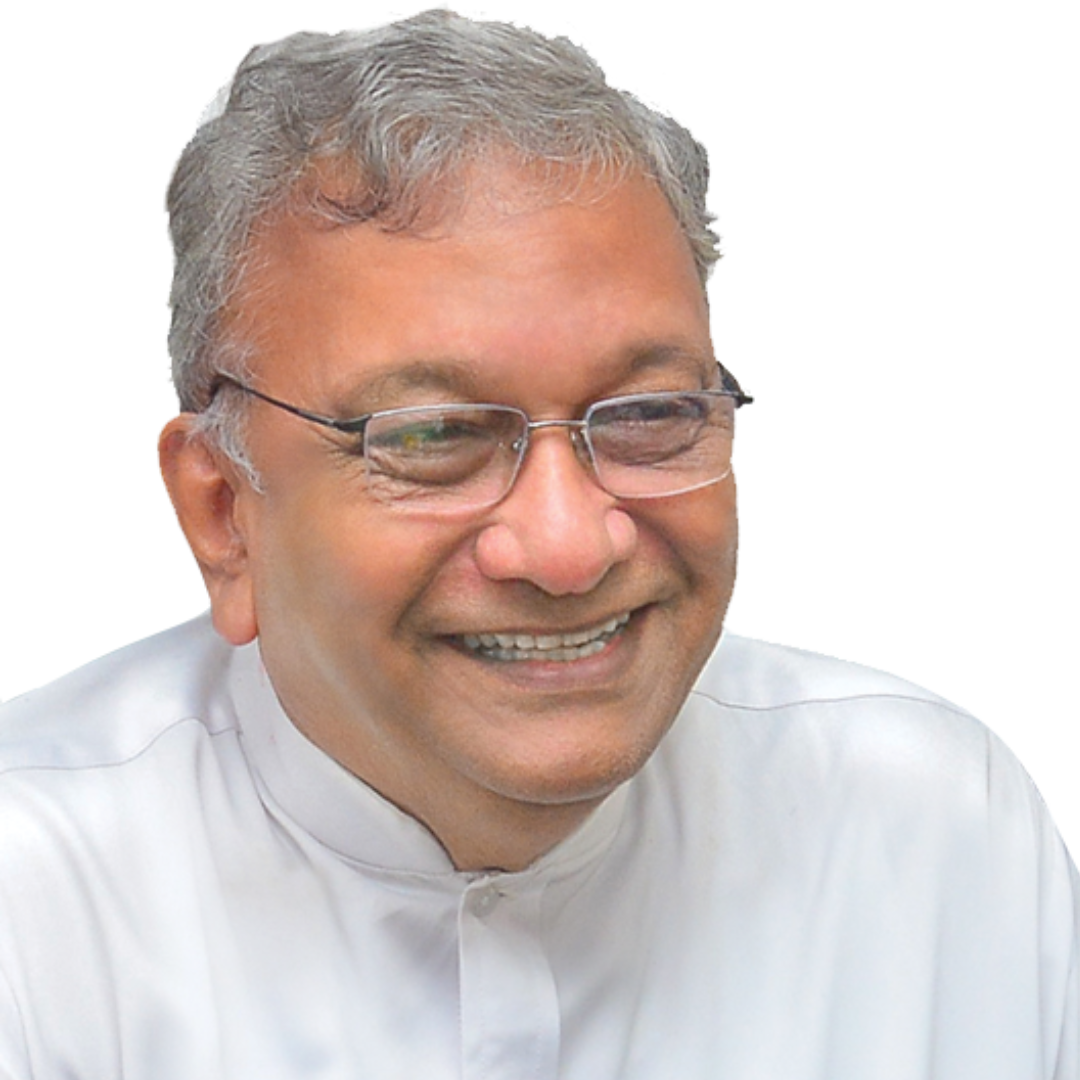
Following the suspension of Parliament’s Deputy Secretary-General (DSG) and Chief of Staff, Chaminda Kularatne, effective from 23 January 2026, former Minister Lakshman Kiriella claimed that because the Speaker has no direct power to remove a DSG under Parliament’s Standing Orders, Parliament must follow British parliamentary tradition in addressing such a disciplinary matter.
To check this claim, FactCheck.lk analysed the Constitution of Sri Lanka, the Establishments Code, Standing Orders of Parliament, the Parliamentary Staffs Act No. 9 of 1953 (as amended), Parliament (Powers & Privileges) Act No. 21 of 1953 (as amended), and academic text.
As noted in published legal analysis, Sri Lanka’s Parliament has room to follow British Parliamentary traditions, precedent, and practice, but only for situations not covered by domestic laws or the Standing Orders of Parliament (Jayasinghe et al., 2019, p. 57). Therefore, FactCheck.lk assessed whether the removal/suspension of a DSG is a situation where they are silent in a way that requires reliance on British tradition, to justify the former minister’s assertion.
Do the Standing Orders provide a process to suspend or remove a DSG?
FactCheck.lk did not find provisions in the Standing Orders that set out a procedure for the interdiction/suspension or dismissal of staff attached to the Secretary-General of Parliament, including the DSG.
Does Sri Lankan law provide a process to suspend or remove a DSG?
Yes. FactCheck.lk found a specific domestic statute—the Parliamentary Staffs Act No. 9 of 1953 (as amended)—that governs disciplinary action against the Secretary-General’s staff, including interdiction/suspension and dismissal (See Additional Note).
Accordingly, Section 7 of the Parliamentary Staffs Act provides that the power to take disciplinary action against members of the staff of the Clerk to each Chamber—including interdiction, punishment, and dismissal—is vested in the Clerk, acting in consultation with the President or the Speaker , and exercised in accordance with departmental regulations made under Section 6.
Although the terminology used in the Parliamentary Staffs Act reflects an earlier parliamentary structure, it continues to apply mutatis mutandis to the present framework. In this context, the term “Clerk” corresponds to the Secretary-General of Parliament (as reflected in the definitional usage of “Clerk” in Section 2 of the Parliament (Powers and Privileges) Act).
Section 6 of the Parliamentary Staffs Act empowers the Secretary-General, in consultation with the Staff Advisory Committee, to make departmental regulations governing discipline, including interdiction, punishment, and dismissal of its staff.
In sum, the silence of the standing orders, which the former minister notes, does not trigger the option of having to rely on British Parliamentary tradition because a domestic law exists to govern disciplinary action on parliamentary staff. Therefore, the former minister’s conclusion that Parliament must rely on British parliamentary tradition to address this issue does not follow.
Therefore, we classify the former minister’s statement as FALSE.
*FactCheck.lk’s verdict is based on the most recent information that is publicly accessible. As with every fact check, if new information becomes available, FactCheck.lk will revisit the assessment.
Additional Note: The Establishments Code, which applies to “public officers” and sets out general rules on public service employment and discipline, was also reviewed for the purposes of the fact-check. However, under Article 170 of the Constitution and Chapter I of the Establishments Code, staff attached to the Secretary-General of Parliament are not “public officers.”
Sources
Jayasinghe, P., Reid, P., & Welikala, A. (2019). Parliament: Law, History and Practice. Centre for Policy Alternatives. https://www.cpalanka.org/wp-content/uploads/2023/10/Parliament-Law-History-and-Practice.pdf
Erskine May’s treatise on the law, privileges, proceedings and usage of Parliament (25th edition, 2019)
Establishments Code of the Government of the Democratic Socialist Republic of Sri Lanka Volume I (2013)
Parliamentary Staffs Act No. 9 of 1953 (as amended)
Parliament (Powers & Privileges) Act No. 21 of 1953 (as amended)
The Constitution of the Democratic Socialist Republic of Sri Lanka (1978)
Standing Orders of the Parliament of the Democratic Socialist Republic of Sri Lanka (as amended up to November 2022)